Think2Finish Academy
Google Antigravity for Developers: Complete Guide to AI-Powered Software Development
The software development landscape in 2026 is undergoing a monumental paradigm shift. With the emergence of advanced agentic AI environments like Google Antigravity, developer workflows are moving from basic code autocompletion to fully autonomous AI pair programming. If you are a student, software engineer, or tech aspirant looking to build a future-proof career, understanding how to leverage AI tools like Google Antigravity alongside strong core engineering skills — such as Python Full Stack Development — is no longer optional; it is essential for success.
What Is Antigravity?
Google Antigravity is an advanced agentic AI coding assistant designed by Google DeepMind to revolutionize how software is planned, built, tested, and maintained. Unlike simple chatbot interfaces or line-by-line autocompletion extensions, Antigravity functions as an autonomous pair programmer integrated directly into the developer workspace.
It operates with complete context awareness of your entire repository, executing command-line instructions, inspecting directory structures, diagnosing runtime exceptions, writing clean code, running automated test suites, and orchestrating full-stack workflows under developer supervision.
Why Is Antigravity Different From a Traditional IDE?
Traditional Integrated Development Environments (IDEs) rely entirely on manual developer input for every step of the development cycle. In contrast, AI-powered agentic environments introduce collaborative autonomous execution.
Workflow Comparison:
Traditional IDE Workflow:
Developer → Code → Test → Debug → Deploy
AI-Powered Antigravity Workflow:
Developer → Requirement → AI Agent → Code → Test → Debug → Review → Deploy
In a traditional IDE, developers spend 70% of their time writing syntax, chasing typos, and debugging environment configurations. With Antigravity, the developer acts as the project architect and reviewer, defining high-level goals while the AI agent handles heavy implementation, testing, and continuous verification.
Why Should Developers Learn Antigravity?
Mastering AI-driven development tools like Google Antigravity gives developers an unfair productivity advantage. Here are the core pillars why every developer must adopt this technology:
- Faster Prototyping: Move from concept to functional MVP (Minimum Viable Product) in hours instead of weeks.
- Intelligent Code Generation: Produce production-ready, clean, and maintainable code adhering to industry design patterns.
- Automated Debugging Assistance: Analyze stack traces and root causes instantly without manual step-by-step print statements.
- Deep Project Understanding: Query large multi-file codebases and digest complex dependencies effortlessly.
- Repetitive Task Automation: Automate boilerplate generation, migration scripts, and configuration setups.
- Comprehensive Documentation: Auto-generate accurate API documentation, docstrings, and architectural markdown diagrams.
- Automated Testing: Generate unit tests, integration tests, and edge-case test suites to ensure robust software quality.
- Workflow Automation: Execute shell scripts, package installations, and git commands directly within the agent loop.
- AI-Assisted Pair Programming: Real-time collaboration where the AI suggests refactoring strategies while respecting existing architecture.
Is Antigravity Replacing Developers?
One of the most frequent questions freshers and engineering students ask is: "Will AI replace software developers?"
The clear answer is No. AI does not remove the need for developers — it fundamentally transforms what developers spend their time doing. Routine syntax writing is automated, but strategic technical decision-making becomes far more valuable.
In the modern AI-first engineering era, companies in Thanjavur, Chennai, Bangalore, and globally are seeking developers who excel at:
- Problem Solving: Deconstructing complex business problems into modular technical solutions.
- System Architecture: Designing scalable database schemas, microservices, and secure API contracts.
- AI Orchestration: Prompting, guiding, and configuring AI agents to complete complex software tasks accurately.
- Verification & Security Review: Auditing AI-generated code for security vulnerabilities, memory leaks, and logic flaws.
- Deployment & Infrastructure: Deploying full-stack applications to cloud servers with CI/CD automation.
Antigravity + Python: The Ultimate Development Duo
Python is the backbone of modern software engineering, data science, and Artificial Intelligence. When combined with Google Antigravity, Python development reaches unprecedented velocity.
Here is how an AI development environment assists developers across a complete end-to-end Python pipeline:
Python → Flask / Django → REST API → MySQL → Frontend → AI Integration → GitHub → Deployment
Whether you are building a simple REST API in Flask or an enterprise database-backed application in Django with MySQL, Antigravity handles script generation, database migrations, endpoint route definitions, and payload validation seamlessly.
Antigravity + Full Stack Development
Full stack engineering demands mastery across multiple technology layers. Antigravity acts as a force multiplier across every layer of the stack:
- Frontend Layer: Building responsive user interfaces using HTML5, CSS3, JavaScript, React, or Vue with interactive micro-animations.
- Backend Layer: Implementing business logic, authentication handlers, session management, and server middleware in Python.
- Database Layer: Structuring MySQL/PostgreSQL tables, writing optimized SQL queries, and creating indexing strategies.
- API Layer: Designing RESTful endpoints, validating JSON payloads, and handling HTTP response statuses cleanly.
- Testing Layer: Running automated unit tests and integration tests to verify database connections and API routes.
- Deployment Layer: Configuring web servers (Apache, Nginx, Gunicorn), setting up SSL certificates, and managing git version control.
Antigravity vs ChatGPT
Beginners often confuse general conversational AI tools with specialized AI development environments. Here is how they differ:
| Feature | ChatGPT | Google Antigravity |
|---|---|---|
| Primary Purpose | Conversational AI & General Q&A | Integrated AI Agentic Development |
| Workspace Access | Isolated chat window (Copy-Paste required) | Direct project directory & terminal execution |
| Code Execution | Limited sandboxed snippets | Full terminal execution, debugging & test suites |
| Context Scope | Prompt buffer / uploaded files | Complete codebase awareness across files |
Antigravity vs Claude
Both Google Antigravity and Anthropic's Claude are leading AI solutions, but they fulfill distinct roles in developer workflows:
- Coding Assistance: Claude excels at reasoning and syntax synthesis; Antigravity integrates this intelligence directly into project execution loops.
- Project Context: While Claude processes large context windows, Antigravity dynamically searches, edits, and verifies local repository files on disk.
- Agentic Workflows: Antigravity utilizes multi-tool agentic loops (file editing, terminal commands, browser testing, diff inspection) to complete complex engineering tasks autonomously.
- Developer Experience: Antigravity provides an interactive, human-in-the-loop pair programming experience inside the developer environment.
Antigravity vs Lovable
It is important to distinguish between prototype generation tools and full developer-controlled AI environments:
- Lovable: Specialized in rapid application prototyping and visual web app generation from high-level prompts.
- Google Antigravity: A developer-controlled development environment suited for custom full-stack architectures, complex backend logic, database management, and enterprise software engineering.
Rather than direct competitors, these tools serve different stages of product development — Lovable for initial rapid prototype validation, and Antigravity for engineering production-grade software.
Why Choose Think2Finish Academy for Python Full Stack Training in Thanjavur?
Located in the heart of Thanjavur, Think2Finish Academy provides classroom coaching and online live training tailored for students, freshers, and working professionals.
Our industry-crafted Python Full Stack Development Program includes:
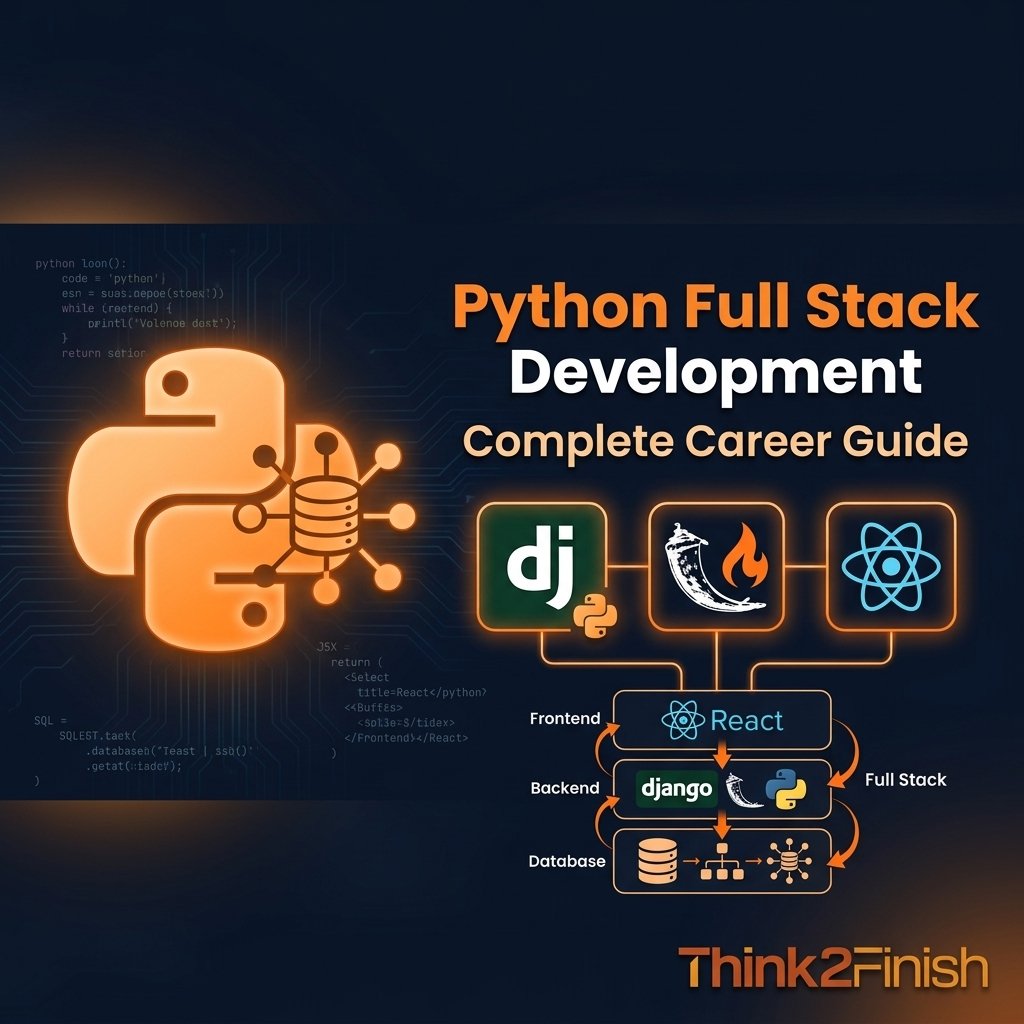
- Comprehensive Curriculum: Python fundamentals, Flask/Django, MySQL/PostgreSQL, HTML5, CSS3, JavaScript, and REST APIs.
- AI Tool Integration: Learn hands-on how to use modern AI coding assistants (Antigravity, Copilot, ChatGPT) to write code 5x faster.
- Live Real-World Projects: Build production-grade web applications, corporate assessment portals, and e-commerce platforms for your portfolio.
- 100% Dedicated Placement Support: Resume building, mock technical interviews, soft skills training, and direct placement drives with top tech companies.
- Expert Mentorship: Learn directly from industry practitioners like Logeswaran S with years of hands-on software & AI experience.
Ready to launch your tech career with Thanjavur’s top-rated website software and AI training institute? Contact Think2Finish Academy today or drop by our classroom in Thanjavur to get started!